

The shared phone in clinical research has been a fixture in coordination for years, and most teams inherited it without ever questioning whether it was the right call.
If your team is still routing participant communication through a single phone used by the research team, checked inconsistently, and occasionally left on someone’s desk over a long weekend, you already know the frustration. The question worth asking is whether the shared study phone is genuinely serving your research, or whether it’s simply what everyone has always done.
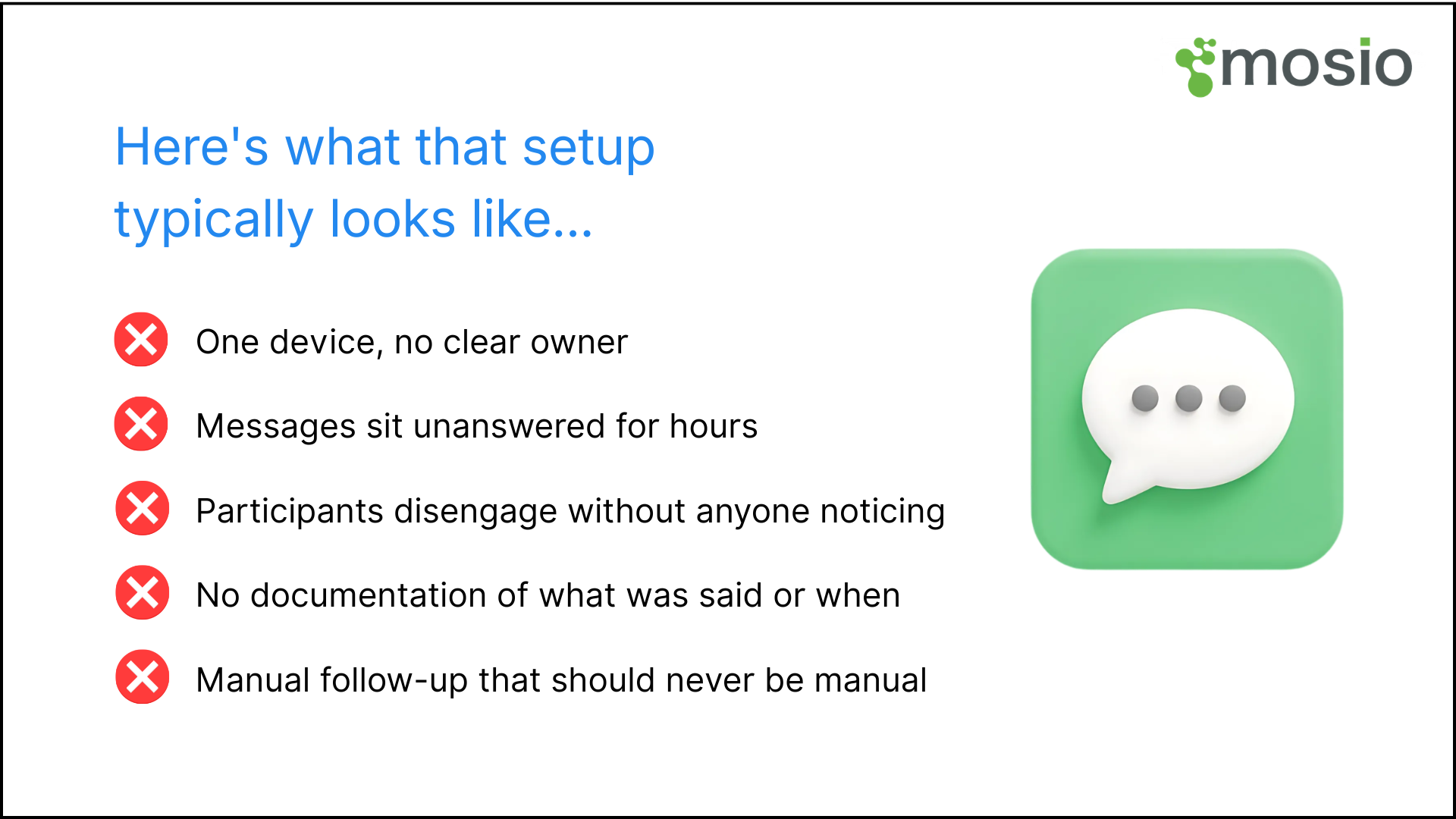
In my experience, here’s what that setup typically looks like in practice:
- One device, no clear owner.
- Messages sit unanswered for hours.
- Participants disengage without anyone noticing.
- No documentation of what was said or when.
- Manual follow-up that should never be manual.
I’m going to break down where the shared phone in clinical research falls short, where personal phones outperform it, and how Mosio changes the calculus entirely.
If, after reading this article, you feel a sense of relief knowing Mosio could boost participant response rates and coordinator efficiency, take it as your sign to request a free project plan from our team.
Using a shared phone in clinical research is now an outdated strategy.
My Case For A Shared Phone In Clinical Research (And Where It Breaks Down)
I’m generally skeptical of dismissing tools outright without acknowledging why they exist in the first place. The study phone in clinical research became standard for real reasons: IRB considerations around participant privacy, the need for a documented communication channel, and the desire to keep personal and professional contact separate for coordinators.
Those concerns are legitimate. A shared device with a dedicated study number creates a clear boundary between researcher and participant, and it gives the study a single point of contact that doesn’t disappear when a coordinator leaves the team.
The breakdown happens in execution. A shared phone is only as reliable as the person holding it, and in most research environments that changes constantly. Coverage gaps, inconsistent response times, and missed messages are almost inevitable when a physical device is the centerpiece of your participant communication strategy.
I’ve always found that the studies with the worst dropout rates are the ones where participants felt like reaching the study team was genuinely difficult. A shared phone that nobody is actively monitoring is often the culprit.
Here’s Why Personal Phones Change Everything For Participants…
Participants don’t think about your communication infrastructure. They think about whether the study is easy to engage with or not, and personal phones tip that balance considerably in your favor.
Text messages sent to a participant’s own device land in the same place they check for everything else: messages from family, calendar reminders, banking alerts. The friction of engaging with your study drops to nearly zero when you’re meeting participants where they already are.
It’s interesting to see how response rates shift when teams move from shared study phone outreach to automated messaging on personal devices through Mosio. The messages aren’t just getting through faster. They’re getting read and responded to in a way that a call from an unfamiliar number simply can’t replicate.
Here’s what personal phones do that a shared study phone cannot:
- Automated reminders go out without anyone manually sending them.
- Participants are reached at the moment that matters.
- Conversations are logged and visible to the whole team.
- Messages feel personal, not generic.
- Nudge follow-ups fire automatically when participants go quiet.
The Privacy & Compliance Question Coordinators Always Ask
I think people often forget that using personal phones for participant communication doesn’t mean using a coordinator’s personal number. Mosio operates through a dedicated platform number, which means participants never see a coordinator’s private contact information and coordinators never use their own devices to communicate with study participants.
The privacy boundary that made shared study phones appealing is preserved, and the operational limitations that made them frustrating are removed. Every conversation is logged in the platform, timestamped, and accessible to the full team regardless of which coordinator sent the message or when.
This is where Mosio genuinely closes the argument for most research teams. The shared study phone was a workaround for a legitimate concern. A purpose-built messaging platform solves the same concern more completely, without the coordination headache.
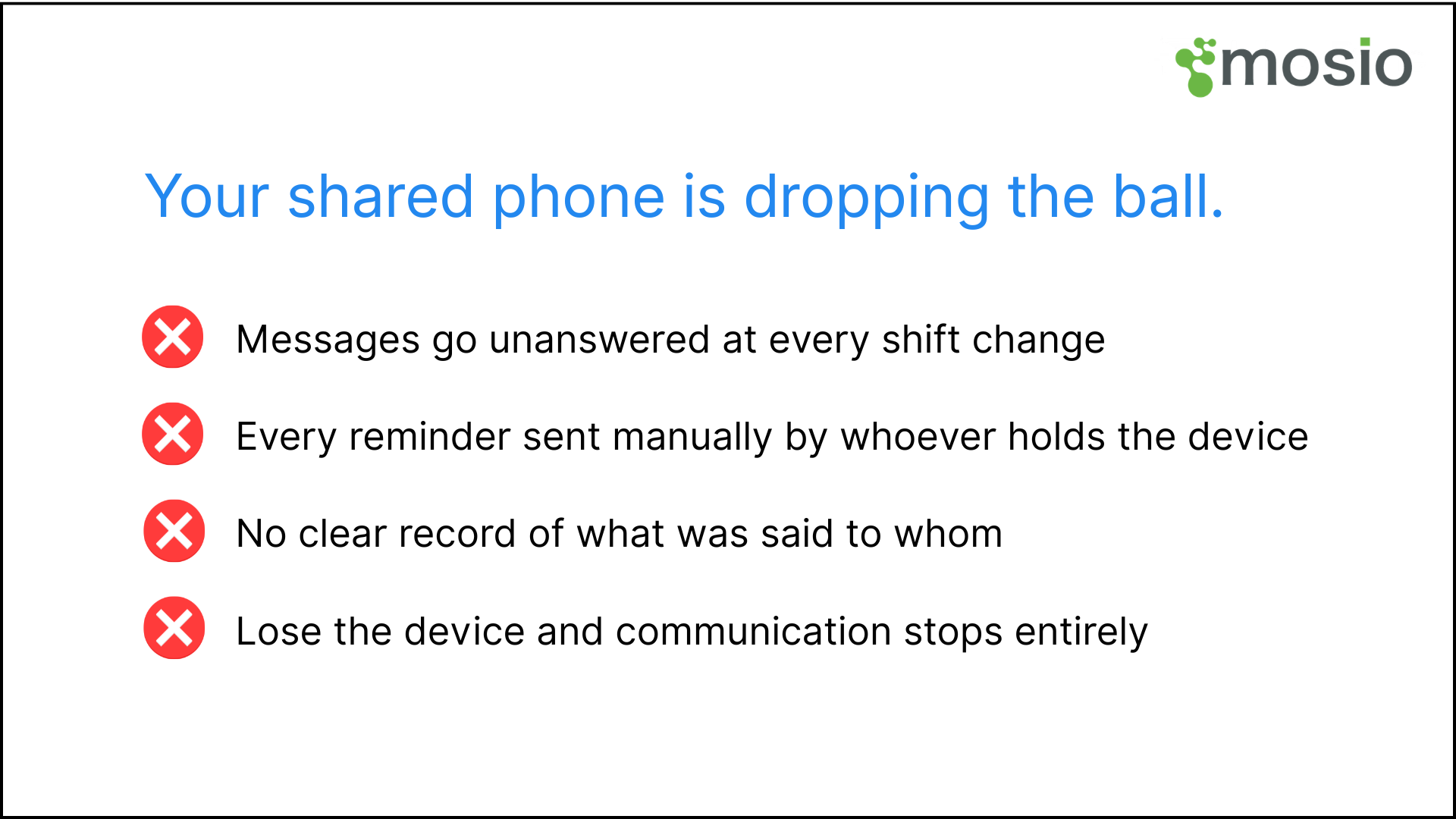
Your shared phones in clinical research are dropping the ball.
Your Shared Phone Is Dropping The Ball, And Your Participants Know It
When I speak with research coordinators about communication challenges, the shared phone in clinical research comes up consistently as a source of low-grade, persistent friction. Nobody describes it as a crisis. They describe it as a daily annoyance that compounds over the course of a long study.
Here’s where it tends to break down most visibly:
- Messages sit unanswered every time coordinators switch shifts.
- Every reminder has to be sent manually by whoever is holding the device.
- There’s rarely a clear record of what was said to whom and when.
- Lose the device and communication stops entirely.
How Mosio Replaces The Single Phone Used By Your Research Team
Mosio was built for exactly the environment research coordinators work in: multiple studies running simultaneously, rotating staff, participants with varying levels of engagement, and data integrity requirements that can’t be compromised.
The platform gives every study a dedicated communication channel that any authorized team member can access from their own device. Messages are centralized, logged automatically, and visible across the team without anyone needing to physically hand off a phone.
Here’s what that looks like in practice:
- Any team member can log in and see the full participant conversation history.
- Automated messaging schedules run without manual intervention.
- Nudge reminders fire when participants go quiet.
- Appointment reminders go out on schedule regardless of who is covering.
- Response data flows directly into your existing EDC or REDCap setup!
The enrollment process takes less than 15 seconds per participant, which means getting someone into an automated communication schedule happens during the consent visit rather than as a separate administrative task later.
Which Setup Is Right For Your Study?
I’m usually reluctant to give a blanket answer here because study design, participant population, and team size all matter. That said, there are some clear indicators.
A shared study phone might be sufficient for a very small study with a stable, single-coordinator team, a short duration, and participants who are highly engaged and proactive about reaching out. In that narrow scenario, the operational limitations are manageable.
For almost everything else, personal phones combined with Mosio’s platform outperform the shared device on every metric that matters: response rates, data completeness, coordinator efficiency, and participant retention. The automation alone recovers hours of coordinator time each week that would otherwise go toward manual follow-up!
The shared study phone solved a problem that better tools now solve more completely. Coordinators who make the switch consistently describe it as one of the simpler decisions they’ve made, and the impact on study data quality shows up quickly!
Get a free project plan from the Mosio team today and see how it fits into your current study setup.