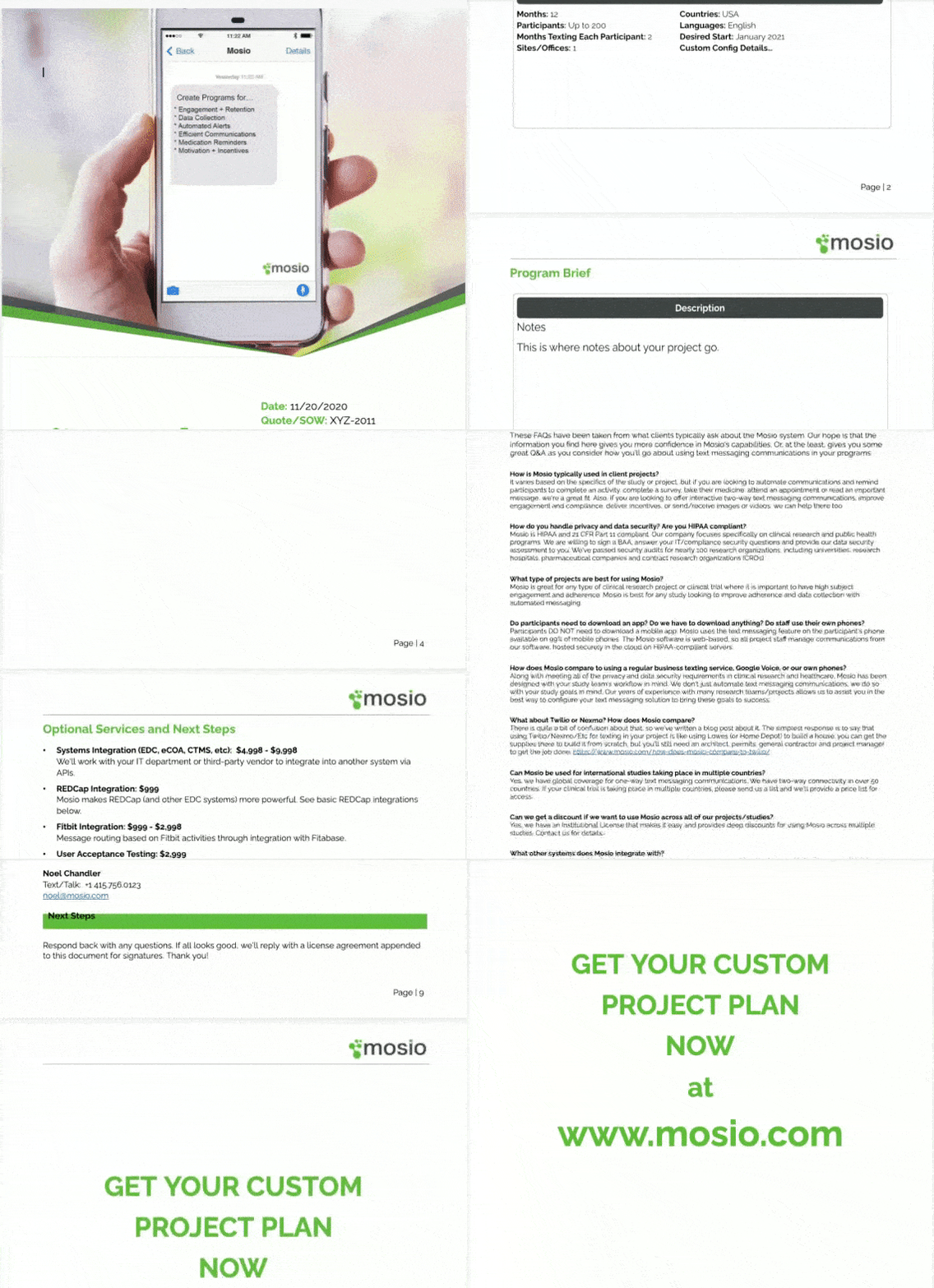


What if the biggest compliance tool in your study is already in your participants’ pockets?
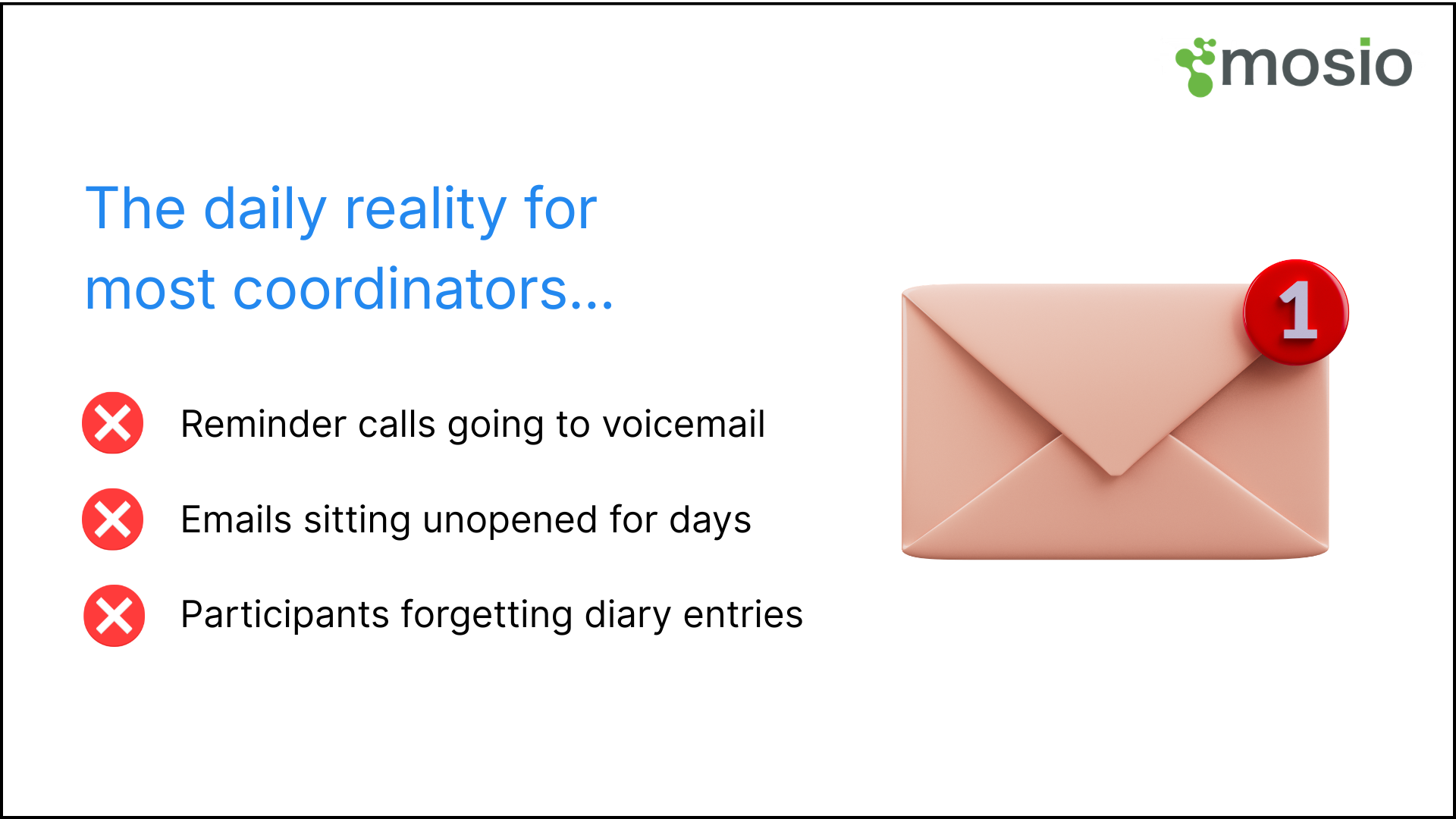
I’ve found that research coordinators spend an enormous amount of time chasing people down.
I see reminder calls go to voicemail, emails sit unopened for days, and participants forget to complete a diary entry or take a dose at the right time.
This creates massive frustration and that compounds across every active study you’re managing simultaneously.
The answer most coordinators eventually land on is also the most obvious one… personal phones.
Participants already have them, already check them constantly, and already use them to manage the details of their daily lives. Whether your team is using them in a way that realistically moves compliance numbers is another question entirely.
Here’s Why Sending The Occasional Reminder Text Isn’t Enough
I’ve noticed that a lot of research teams think they’re using personal phones effectively because they send the occasional reminder text, but occasional and strategic are very different things.
A real mobile strategy means personal phones are integrated into your study workflow from enrollment through closeout. Participants receive the right message at the right moment, without a coordinator having to manually trigger anything, and your team spends less time on repetitive outreach and more time on the work that genuinely requires their expertise.
Text messages are opened and read within three minutes by 90% of recipients. Compare that to email open rates and the case for personal phones becomes straightforward.
We recommend using personal phones in research to improve participant compliance.
Why Are Your Participants Going Quiet Mid-Study?
Personal phones get participants’ attention. That part is straightforward. Where most research teams run into trouble is in the execution…
Reminders go out manually, which means they depend on a coordinator remembering to send them. When studies are running in parallel and schedules get hectic, manual reminders are the first thing to slip. A participant misses a diary entry, then misses another, and by the time someone notices, it’s already a data problem.
The other failure point is follow-up. Sending a reminder is step one. Knowing whether the participant actually completed the task is step two, and a lot of teams have no visibility into that until they’re already behind. I think it’s worth remembering that compliance isn’t just about reminding people. It’s about creating a communication loop where your team can see what’s happening in-the-moment and respond before small issues become protocol deviations.
Here’s where manual processes consistently break down:
- Coordinators forget to send reminders when managing multiple studies at once.
- Participants receive no follow-up when they don’t respond to an initial message.
- Staff have no real-time visibility into who is and isn’t completing required tasks.
- No-shows go undetected until the appointment slot is already empty.
What Personal Phones Can Actually Do For Your Study
When personal phones are used inside a structured messaging system like Mosio, the scope of what becomes possible expands considerably. Here’s what coordinators working this way are seeing:
- Automated reminder schedules run in the background without anyone manually triggering them.
- Two-way texting gives participants a low-friction way to ask questions or confirm appointments.
- Nudge reminders fire automatically when a participant hasn’t responded within a defined window.
- Dashboards surface response trends as they happen, not at the end of the week.
- Custom data injection makes every automated message feel personal rather than generic.
Timing in Mosio can be calendar-based, event-triggered, or tied to specific study milestones. Set it up once during configuration and it runs for the life of the study. This is particularly valuable in studies relying on ePRO or EDC platforms, where the nudge logic needs to run reliably without anyone watching it.
What You Say To Participants On Day One Sets Everything In Motion…
I’m generally skeptical of compliance strategies that treat enrollment as a formality. How you introduce the texting program to a participant in the first days of their involvement shapes how they engage with it for the rest of the study.
Participants need to understand that messages are coming, why they’re coming, and that responding is easy. When that expectation is set clearly at enrollment, the first reminder doesn’t feel like an intrusion. Mosio’s enrollment workflow is designed with exactly this in mind: getting a participant into an automated messaging schedule takes less than 15 seconds, which means coordinators can do it during the consent visit without adding meaningful time to either side of the conversation. That’s a win for everyone!
Nobody Is Responding To Your Robotic Reminder Blasts
Automated text messaging that feels cold and generic gets ignored quickly, and most coordinators have seen this firsthand.
Mosio lets coordinators inject custom data into messages, including participant names, coordinator names, and study-specific details. It’s interesting to see how drop-off rates shift when teams personalize message templates versus sending the same generic reminder to everyone on the same schedule. The difference is especially pronounced in longer studies where participant fatigue becomes a real risk.
When Personal Phones Solve The No-Show Problem
Appointment adherence is one of the most consistent pain points I hear about from research coordinators. A no-show doesn’t just create a scheduling headache. It creates a protocol deviation, a replacement cost, and in some cases a loss in longitudinal data that can’t be recovered.
Here’s how a structured personal phone reminder cadence for appointments should work:
- Send an initial reminder several days before the appointment so participants can flag conflicts early.
- Follow up the day before with a confirmation message that includes any preparation instructions.
- Send a morning-of reminder with location details or telehealth access information.
- Alert the coordinator in-the-moment if a participant cancels or doesn’t confirm, so rescheduling can happen immediately.
Mosio handles all four steps automatically once configured! I’ve always found that coordinators who struggle most with no-shows are the ones relying on email and hoping participants check their inbox before the appointment date.
Building A Personal Phone Strategy That Holds Up Across Studies
Start with standard message templates your team can customize per study, define trigger logic for nudges and follow-ups in advance, and train coordinators to enroll participants and monitor responses without adding meaningful time to their workflow.
Mosio’s Storylines module supports exactly this…
Reusable automated communication sequences that adapt across protocols rather than getting rebuilt from scratch each time!
Personal phones are the most direct line you have to your participants. The coordinators getting the most out of them aren’t sending more messages. They’re sending the right ones, at the right time, with a system that closes the loop automatically.
Get a free project plan from the Mosio team today and see how it fits into your current study workflow.